
Scenario
Modelling
at Scale
Tukameslov operates across Canada, giving learners in every region access to structured scenario-based education. The platform launched in 2019 with a focus on applied reasoning over rote recall.
See the learning program
Built on a specific gap
Most online learning platforms test what you remember. Tukameslov was designed to test what you can do with that knowledge under pressure — in branching scenarios where the right move depends on context, not just recall.
The platform serves learners across rural and urban regions equally. Modules are built around realistic situations: budget constraints, incomplete data, time-bound decisions. There are no trick questions, but there are no easy ones either.
Feedback appears immediately after each decision point, not at the end. That timing is deliberate — retention improves when correction is tied closely to the moment of error, not separated by several screens.

Two roles, one shared assumption
The platform was built by practitioners who use scenario modelling professionally — not by instructional designers working from theory. That background shows in how modules are structured.

Tobias Fleischer
Curriculum LeadTobias spent eleven years building decision-training programs for municipal planning departments before joining Tukameslov. He designs the scenario trees and writes the feedback logic for complex multi-path modules. His work focuses on ensuring that incorrect paths produce genuinely useful explanations, not just "wrong — try again."
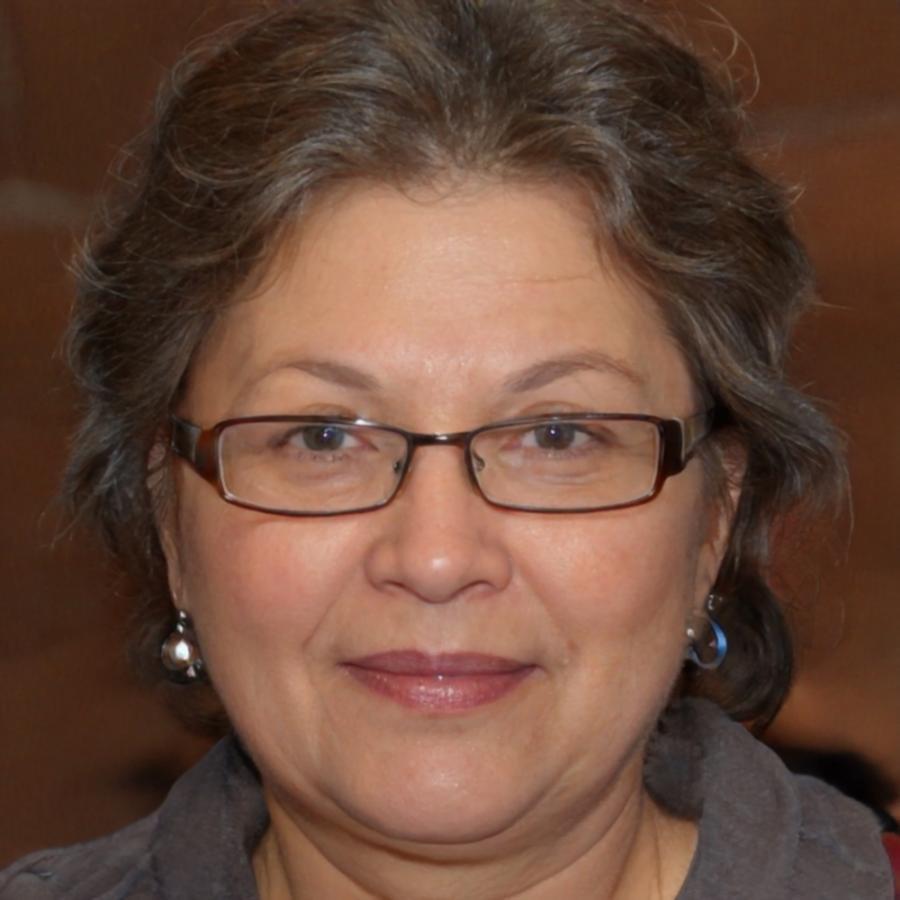
Nadine Ouellette
Platform DirectorNadine manages learner experience from first contact to certification. Her background is in adult education policy, and she has spent years working on equity-of-access questions specific to distance learners in northern and rural communities. She oversees how the platform distributes content across regions with varying connectivity conditions.
Four phases, no shortcuts
Scenario modelling on Tukameslov follows a consistent structure across all subject areas. The sequence is the same whether a learner is working through a 20-minute module or a 4-hour certification track.



Context framing
Each module opens with a defined situation — an organization, a constraint, and a role. Learners are not told what question they are about to answer. They are placed inside a moment that requires them to read the situation first.
Branching decision points
At each node, learners choose from 3–5 options. Some paths are clearly wrong; others are plausibly reasonable but contextually inappropriate. The design rewards situational reading, not elimination of obvious errors.
Immediate contextual feedback
Feedback arrives within seconds of submission and references the specific decision just made. It does not describe the "correct" answer abstractly — it explains why that answer fits the established context and what the chosen path implies downstream.
Path review and replay
After completion, learners see their full decision path as a map. Any branch can be replayed from a previous node. There is no penalty for replaying — the system tracks completion of all paths, not just a single "correct" run.
Progress tied to behaviour, not time
Certification on Tukameslov is not issued based on time spent or modules opened. It requires demonstrating specific decision patterns across a defined set of scenarios — patterns that indicate the learner has internalised the logic, not just the surface rules.
Regional accessibility by design
All modules are built to function on low-bandwidth connections. Content loads progressively, interactive elements are lightweight, and offline-capable versions are available for learners in areas with intermittent connectivity across northern and remote regions.